Crossing Out on the restaurant menu is Not a Strategy
If you step into the kitchen of a small, independent bistro during the peak summer rush, you will quickly realize that the biggest enemy of a chef isn’t a broken oven—it’s an over-ambitious menu.
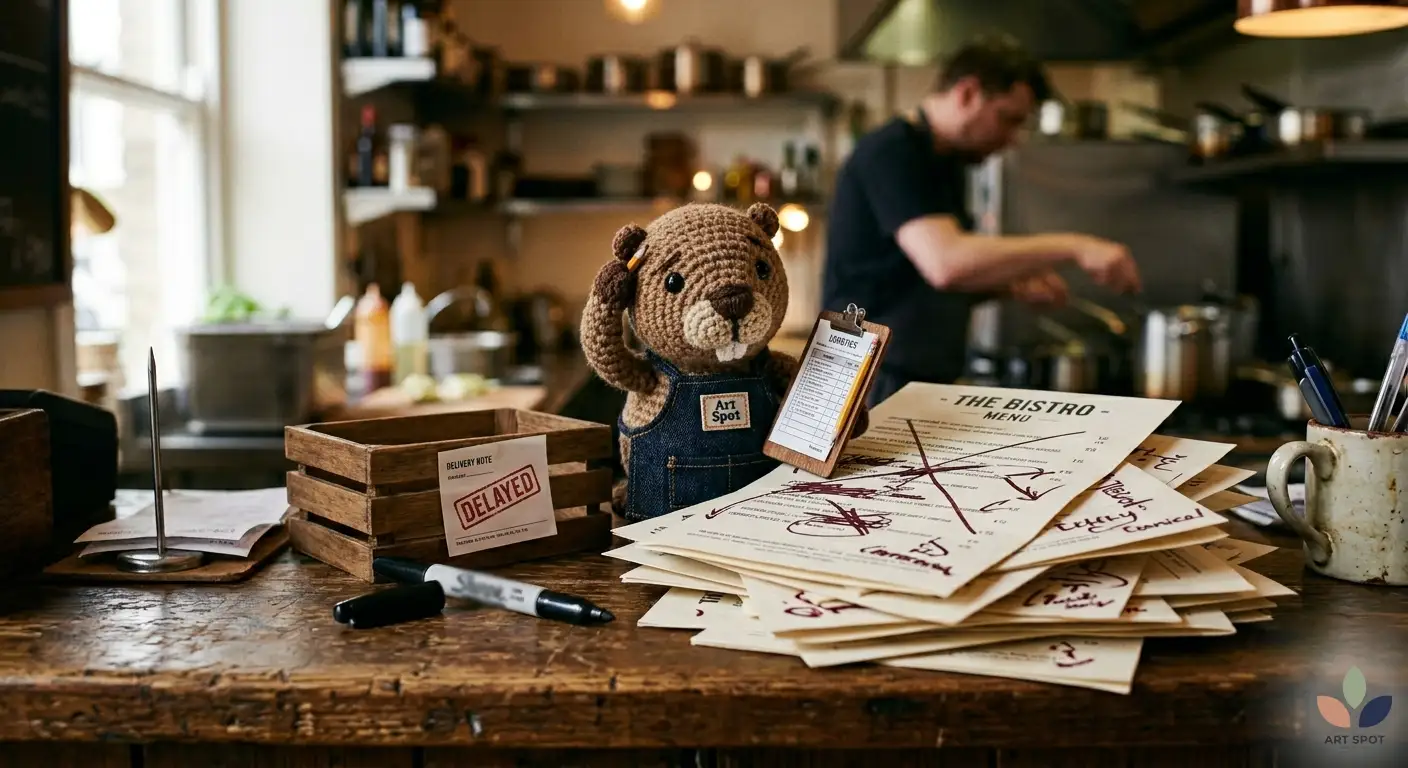
We see it all the time in real life: a charming local spot tries to compete with corporate chains by offering a massive, 10-page document featuring everything from truffles to sushi. But when a delivery gets delayed or the kitchen reaches maximum capacity, reality hits. The waitstaff starts apologizing, and the beautiful paper menu gets aggressively crossed out with a red marker.
Arty says : “A menu is a promise to your guests. If you are rewriting that promise with a marker every single day, you don’t have a design problem—you have an operational identity crisis.”
Trying to maintain a massive list of dishes ruins your quality, stresses your team, and kills your user experience (UX) before the food even arrives. Boutique restaurants don’t win by being everything to everyone; they win by being exceptional at a few curated things.
Strategic menu design (or menu engineering) is the art of aligning your graphic assets with your kitchen’s actual daily capacity. Instead of a permanent 10-page booklet, small spots thrive on a hyper-focused, single-page seasonal menu that changes dynamically.
By pairing a premium, beautifully printed physical menu card for your core daily specialties with a flexible, interactive digital menu on your website, you can adapt instantly. If an ingredient is out, you update the digital side in two clicks—no red ink, no apologies, and no broken promises.