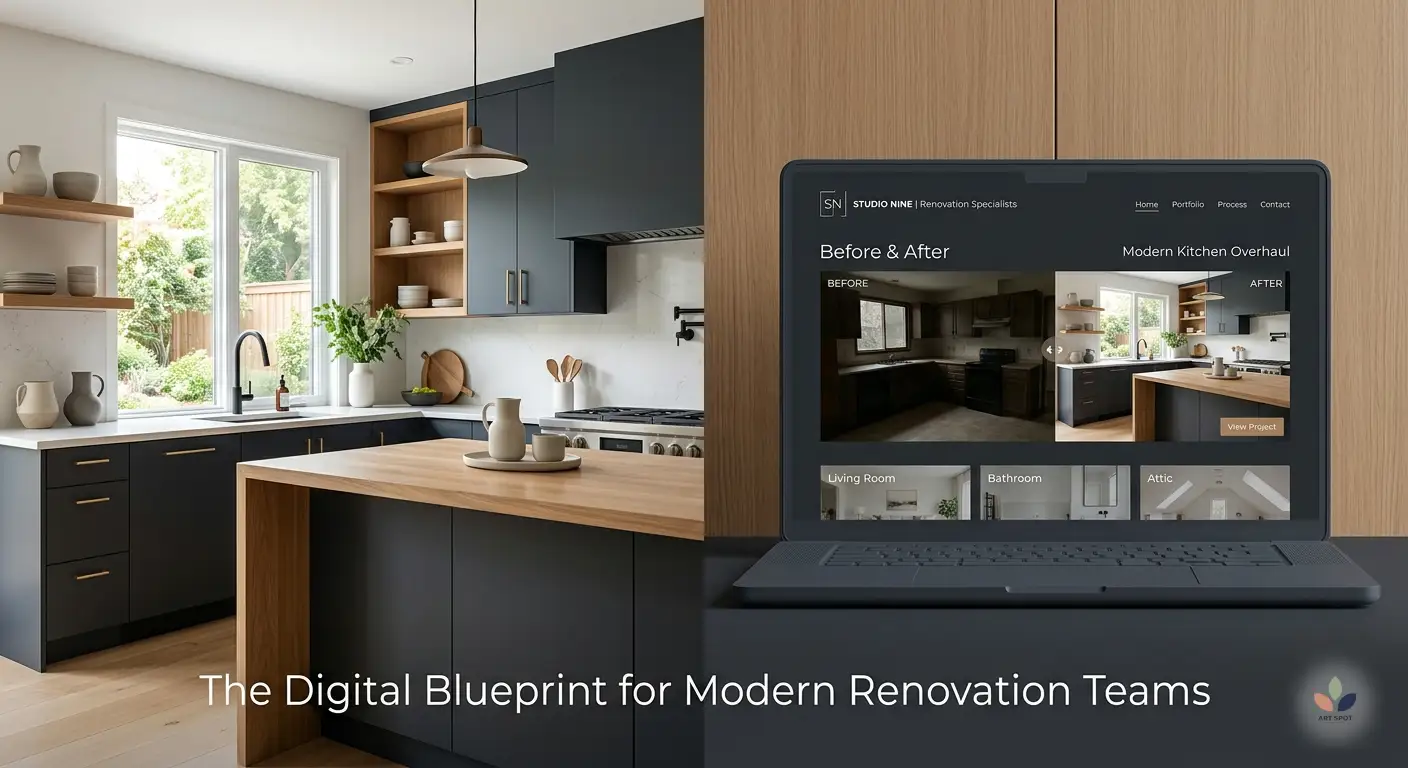
🛠️ Building Trust Online Before You Build On-Site: The Digital Blueprint for Modern Renovation Teams
When a homeowner decides to remodel their kitchen, overhaul their bathroom, or repair a leaky roof, they rarely start their journey by browsing cold corporate construction directories. Instead, they ask a trusted neighbor, post a query in a local Facebook community group, or seek out a direct word-of-mouth recommendation.
But what happens the exact second they get your name? They look you up online.
In the home renovation and small construction niche, mid-to-late summer is the absolute peak of the season. Every independent craftsman (майстор) and small crew is buried under a mountain of work. However, there is a massive difference between simply staying busy with low-margin fixes and consistently landing high-ticket, premium remodeling contracts.
In a highly competitive local market, homeowners are inherently anxious. They are terrified of “ghost” contractors, sudden hidden fees, and abandoned, half-finished drywall projects. If a potential premium client searches for your name online and finds a digital ghost town—no website, zero recent project photos, or absolute radio silence—they will automatically project that lack of professionalism onto your physical work.
Your website isn’t just a vanity project; it is the ultimate tool that validates your word-of-mouth reputation and locks in contracts before you ever step foot on-site. Here is the exact digital blueprint modern renovation teams need to build ironclad trust.
📸 1. The Power of Unbending Visual Proof
In the remodeling industry, your past work is your absolute best salesperson. Homeowners are visual decision-makers; they need to see the exact precision of your tiling, the straightness of your walls, and the cleanliness of your finishes.
Many small construction businesses make the mistake of using heavily staged, artificial stock photography or generic images found online. Savvy homeowners spot these immediately, destroying trust before a conversation even starts.
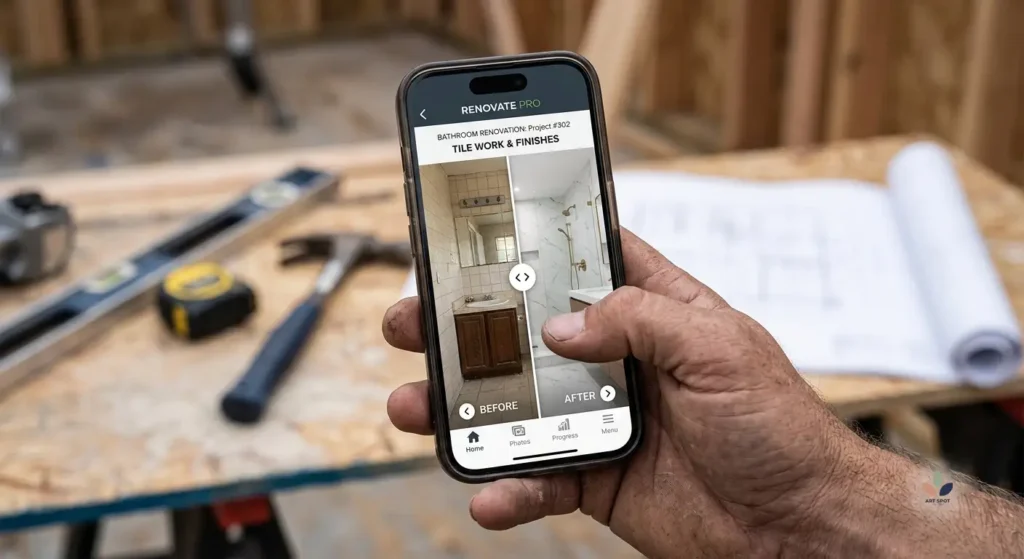
- Interactive “Before & After” Sliders: Your website should feature high-quality, interactive image sliders where a user can drag a divider back and forth. Seeing a dark, outdated 1980s kitchen smoothly transform into a crisp, modern culinary space is an incredibly powerful psychological trigger.
- Raw Realism Wins over Perfection: You do not need to hire an expensive corporate photographer. Clear, bright, high-resolution smartphone photos taken under good lighting are more than enough. Honest, real-world documentation of a project in progress shows authenticity.
- Context and Storytelling: Do not just dump images into an unorganized grid. Add a short text description to your gallery items detailing the scope of work, the challenges overcome (e.g., leveling uneven subfloors), the high-quality materials used, and the general location.
🗺️ 2. Hyper-Local SEO and Service Area Transparency
Renovation and repair work is strictly local. Homeowners need to know with absolute certainty that you operate reliably within their specific geographical boundaries. Furthermore, when an urgent issue arises, they turn to local search engines to find the highest-rated contractor nearest to them immediately.
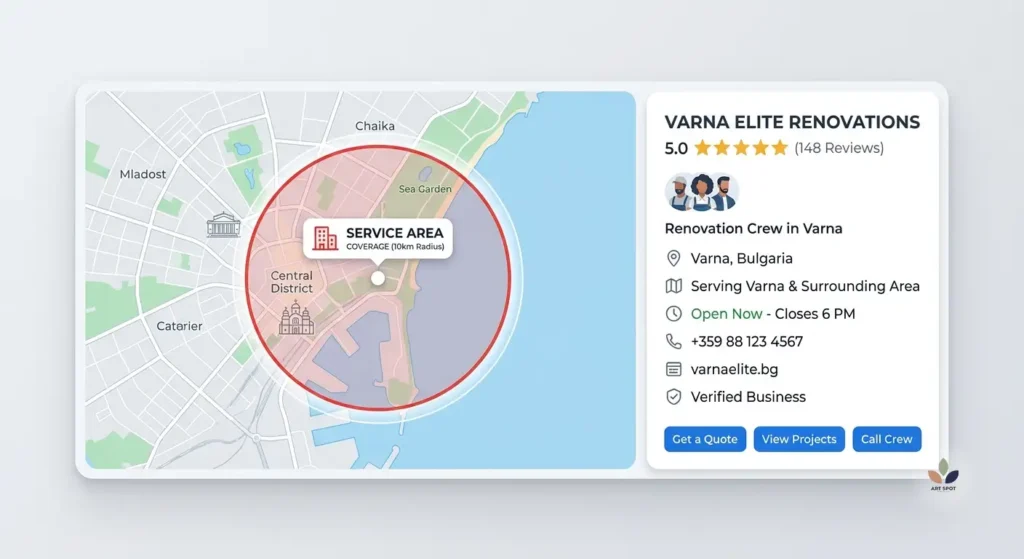
- Google Business Profile Harmonization: Your website and your Google Business Profile must act as a perfectly synchronized unit. Your Name, Address, and Phone Number (NAP data) must be completely identical across both platforms. This consistency is the single most critical factor for ranking in the coveted local Google Map Pack.
- Explicit Service Area Pages: Dedicate a section of your website to explicitly listing the cities, towns, or specific residential zones you cover. If you are a premium craftsman targeting specific neighborhoods or villa zones surrounding a major city, state it clearly.
- Local Project Tagging: Mentioning local landmarks or neighborhoods in your case studies (e.g., “Complete bathroom remodel in the Chaika district”) signals to both Google and local homeowners that you are an active, trusted fixture in their immediate community.
📑 3. Demolishing Friction with Transparent Process Paths
The number one fear keeping homeowners from signing a renovation contract is the dreaded “unforeseen cost” trap. While it is impossible to give a legally binding quote without performing a physical, on-site walkthrough, your website can still eliminate this anxiety by providing absolute transparency regarding your workflow.
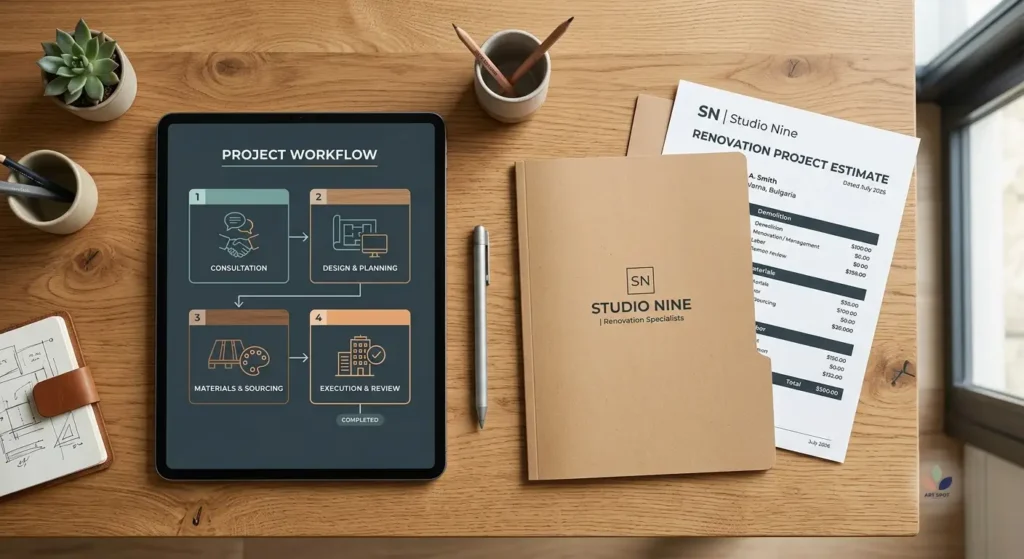
- The Step-by-Step Roadmap: Clearly outline what happens from the moment a prospect fills out your contact form. Break it down into a highly predictable, visual timeline:
- Initial Digital Consultation: Reviewing basic project ideas and rough dimensions.
- On-Site Inspection: Measuring, checking structural integrity, and discussing material choices.
- Itemized Estimate Delivery: Providing a clear, transparent breakdown of labor and material costs with no hidden catches.
- Execution & Hand-off: How you protect their home during dust-heavy phases and deliver the final cleaned space.
- Project Tiers and Scope Management: Clearly define the scales of projects you handle. Whether you specialize in quick cosmetic refreshes or high-end, custom structural overhauls, managing these expectations directly on your website filters out low-intent bargain hunters and attracts clients who respect your true value.